Showing posts with label Memory. Show all posts

Friday, December 27, 2013

What Do You Remember from Your Schooldays? Part II


"


A high school memory just came to me, inspired by this comment to my previous blog on memorization.
When I was in high school (not my favourite time), an English teacher said that everyone in my grade (nine, I think) had to write a one-page story in class right then. The best from the school would be submitted to a city-wide contest and blah blah blah.
Really? This sounded like bs to me - but I was often unhappy back then. I was not in the mood to generate a story out of nowhere.
I knew all the words to "For Emily Wherever I May Find Her" a beautiful song from Simon and Garfunkel's Parsley, Sage, Rosemary, and Thyme album. so I just wrote them out as an essay, tweaking it here and there.  In longhand, it filled a page:
What a dream I had:  pressed in organdy, clothed in crinoline of smoky burgundy, softer than the rain.
I wandered empty streets, down past the shop displays.  I heard cathedral bells dripping down the alleyways, as I walked on.
And then you ran to me, your cheeks flushed with the night. We walked on frosted fields of juniper and lamplight. I held your hand.
When I awoke, I felt you warm and near. I kissed your honey hair with my grateful tears.
A week later, the teacher said I was chosen as a finalist from all the essays in the school. She wanted my permission to submit it.  Clearly whoever was screening the school's grade nine essays was a generation just enough older than me to not have been listening to Simon and Garfunkel.  I told her that I did not want my story submitted. "Thanks, Mrs. Laar," I said, "but it's personal."

I've been thinking recently of another high school memory.  The English curriculum in my grade 12 class included Greek tragedy.  We studied the elements necessary for a tragedy
  • hamartia - the fatal flaw of a tragic hero, usually hubris or pride
  • nemesis - the inevitable cosmic retribution 
  • fear and pity leading to catharsis
My essay for that unit, "Tragic Heroism in Two Films," asked whether the protagonists of Easy Rider and Midnight Cowboy were tragic heroes.  Both films were released in the spring of 1969.  I likely wrote the essay that fall.

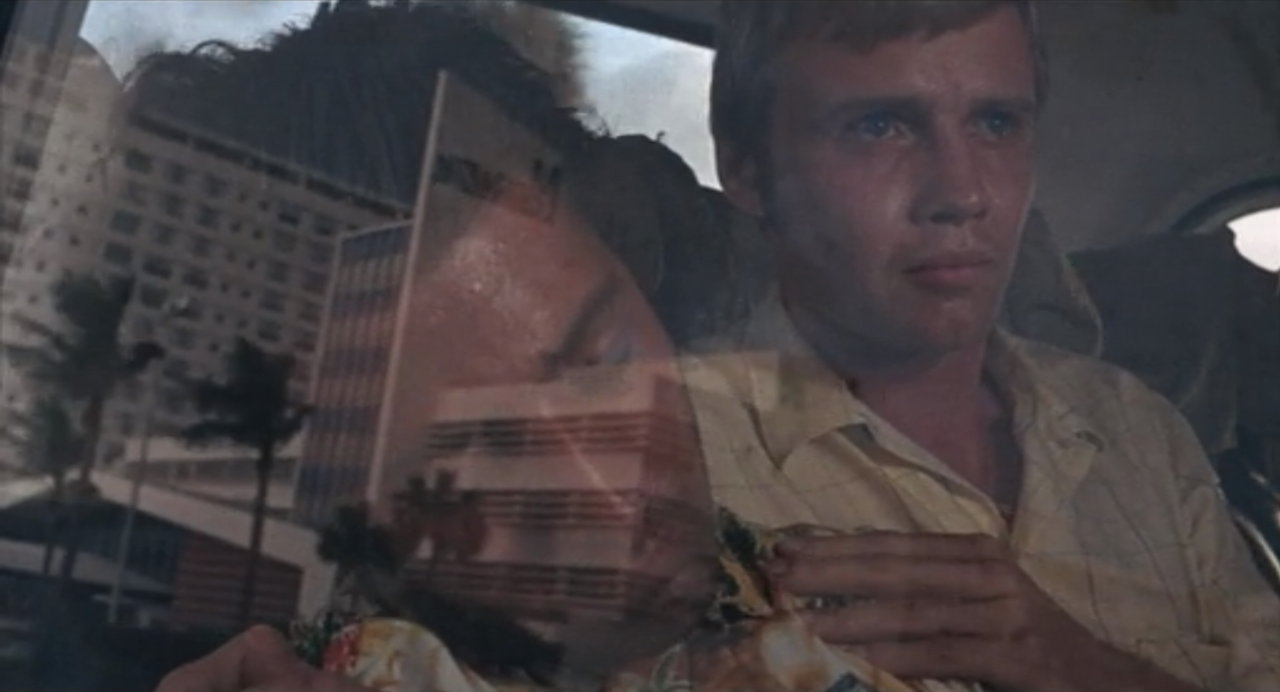
Midnight Cowboy (John Schlesinger, 1969)In my essay, I discuss the tragedy of Ratso Rizzo (Dustin Hoffman).  Rizzo was unhealthy.  His dream was to get to Florida where he could be warm.  Seeing that Rizzo is getting sicker and sicker, Joe Buck (Jon Voigt), robs and murders an old man.  He buys Greyhound tickets to Florida, but Rizzo dies in the bus on the way.  My essay says: 
"I left the film wondering whether it would have made a difference if Rizzo had made it to Florida.  Could he find happiness?  He could escape his situation, but not his wretchedness and self-pity."
Next to that paragraph, in red ink, Mrs. Wilson wrote, "No one ever makes it to Florida."

Every time I go to Florida, I think about Mrs. Wilson and wonder whether she was right.

Did anything that your high school teachers said still make you wonder?

Sunday, June 16, 2013

Can I Trust My Memory?

"Since I treasure my memories, I'm horrified by the idea that I'm making them up." - Len Blum

Back in the early 00s, my brother wrote a column for a national newspaper called "Going to the Movies."  It was a short brilliant column published every Friday.  In it, he'd compare the information available about two films that were playing in his city.  Based on rumours, feelings, and whimsy, he would choose one to see.  The column would end with a "bottom line" about the impact of his chosen movie.

One such column looked at East is East, about a Pakistani-British family, and U-571, about Americans who capture a German submarine.  U-571, Len wrote, makes him feel anxious:  "In the Second World War, two of my uncles were serving on a Royal Canadian Navy destroyer when their vessel was blown in half by torpedoes from a German U-boat.  Each was on a different half of the ship, and each was certain that the other had been killed.  Maybe that's why I don't like German subs.  In any case, both uncles survived."

Every week I would email my brother's column to family members living around the world, including those two uncles.  My uncle Abe wrote me back saying this:
"If the story refers to my wartime experience, there is absolutely no truth to it.  Baron von Munchausen couldn't have dreamed up a more fanciful tale."
My uncle was on a boat that was struck by a bomb from the Luftwaft.  My other uncle was in the navy but except for travelling to Scotland, he stayed on land.

My brother was quite upset when I told him that the uncles denied his story.  The following week, he wrote in his newspaper column that he was once again considering seeing U-571:
"As I mentioned last week, U-571 is a fictitious war story about a bunch of Americans who capture a German submarine.  Speaking of fictitious stories, it turns out that I was entirely wrong when I wrote that my two uncles were on a Canadian destroyer that was blown in half by a German submarine.  My sister spoke with them, and apparently this never happened.
I'm very upset because I remember hearing this story when I was a child and thinking it was wonderful.  Since I treasure my memories, I'm horrified by the idea that I'm making them up." 
I understand how his memory might have been jumbled.
  1. My uncle's ship, the HMCS Matane, destroyed a German U-boat with depth charges three months before it was hit from the sky.
  2. The Matane was attacked, just not by a submarine.
  3. My uncle survived the attack and went on a short leave to Scotland where he did meet up with his brother.  Apparently they spent a few days together driving the people at the gatehouse crazy by their coming and going dressed in identical uniforms.
Shake these various stories up in a child's brain and add forty years and a whole new "memory" appears.

It turns out that even memories of our most intense times are unreliable, and it doesn't require 40 years for the mash-up.  Still, I treasure my memories - even if I am making them up.  What about you?

***************

Unit: Annan 20 Jul 1944
Bay of Biscay, South of Brest Peninsula. HMCS Matane was struck by a glider bomb, launched by a Dornier 217. The ship was rendered dead in the water. There were three fatalities and a number of injuries attributable to the attack. Matane was towed into Plymouth by HMCS Monnow, and after major repairs returned to service.

Monday, September 12, 2011

What Do You Remember from Your Schooldays? Part I

We certainly learn a great deal in our 15-20 years of schooling, but how many specific moments do we remember?

Back in the late 80s, just this time of year, I was getting ready to teach the first class of the semester to 40 electrical engineering students at Mohawk College in Hamilton, Ontario.  I was watching my round, red kitchen wall clock -- but the hour hand had slipped and it was later than I thought.  By the time I showed up for class, the students had left.  This was not going to help build a relationship of trust.

I held my first class with them two days later.  I apologized for my earlier absence and promised it wouldn't happen again.  I then pulled out the old clock and a hammer, and smashed the clock into tiny pieces in front of them.


Many years later, I ran into one of my former students.  He said, "Hey, I know you.  You're the teacher that smashed the clock."  Then, "Yeah, that's about all I remember from my college days."

What do you remember?